Cave of Forgotten Dreams
Who is he that hideth counsel without knowledge? therefore have I uttered that I understood not; things too wonderful for me, which I knew not.
AI began to dominate my consciousness some time around February of this year. I think the primary driver of my obsession, initially anyways, was a leadership change at my work. My new boss uses AI heavily for everything work-related. A month or two into his tenure, we were 45 minutes into a call about the product roadmap and a possible customer announcement. Abruptly, he said, "Hold on a sec-" and began sharing his screen. The familiar MacOS desktop, browser with Claude open, filled the display. He copied the transcript of our call up to that point (he records transcripts of every call in order to feed the text into AI), and opened a new chat with the prompt: "Say where Charlie's right, and where he's wrong. Say where I'm right and where I'm wrong." I consulted my avatar in the lower-right. We both waited in silence while Claude thought, then read aloud through the findings one-by-one, helpfully bulleted, an even number for each of us. I felt called-upon to act the part of the gentleman, gallantly agreeing with Claude's softly (oh-so-softly) couched criticisms of my viewpoint, while conceding everywhere Claude expressed subtle (oh-so-subtle) approval of my boss. The call ended shortly afterwards, somewhat awkwardly for both of us, I think. I had just experienced the most baffling mixture of radical transparency and impossible opacity.
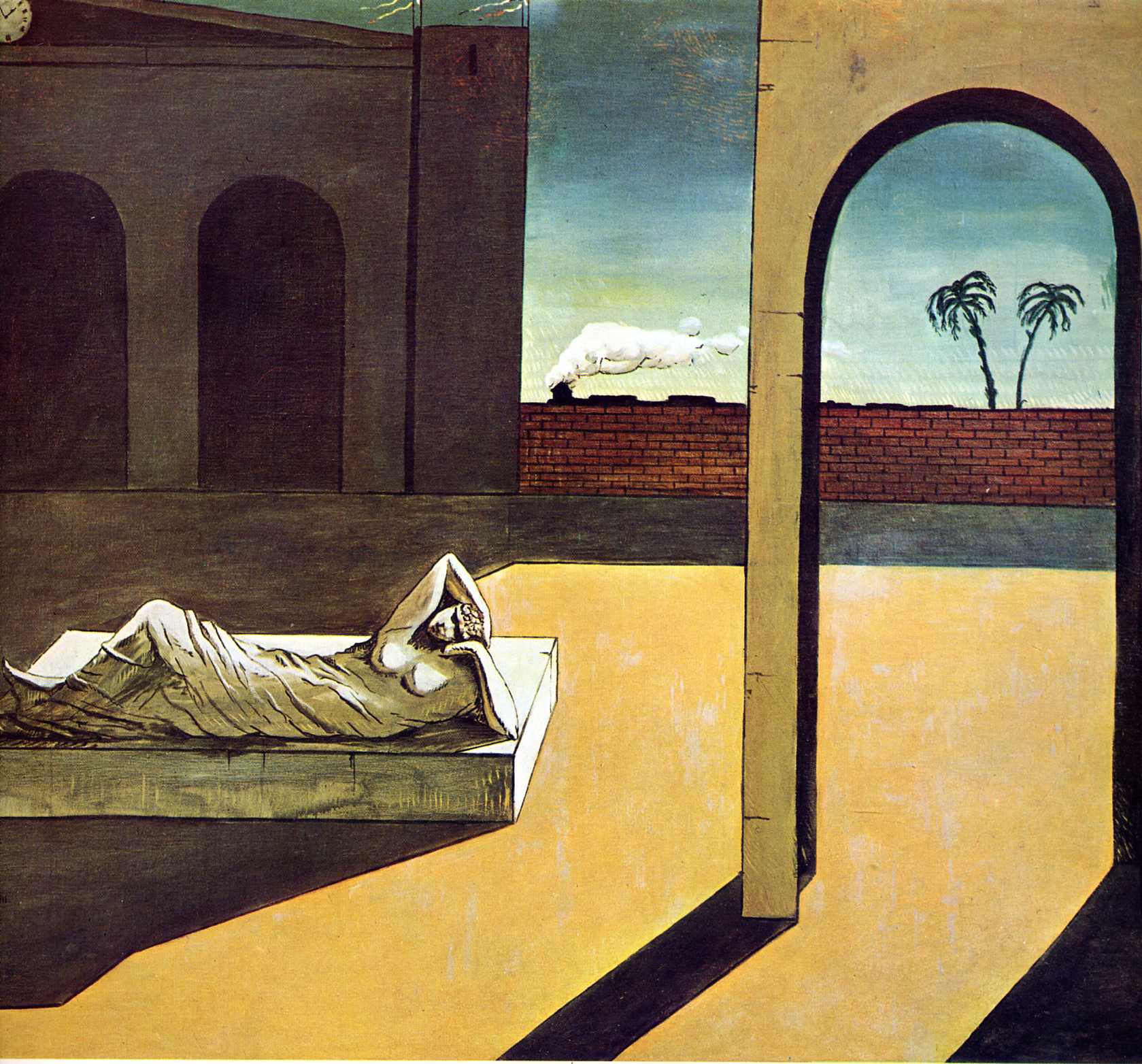
Have I missed the mark, or, like true archer, do I strike my quarry? Or am I prophet of lies, a babbler from door to door? - Aeschylus (Agamemnon)
At the beginning of his tenure, I initially answered my new boss' questions, posed via Slack, with as much candor and detail as I regularly applied to technical matters with my colleagues. After a couple of these, I noticed that my responses were never engaged with beyond an emoji reaction. Instead I observed my responses being fed directly into his AI assistant, and the AI's responses returned to me verbatim - often just linked, but sometimes with the invitation: "Check this out". There was no attempt at subterfuge, my boss has always been refreshingly open, but these were forms of interaction I never had imagined until I was in them. It is an unsettling, helpless feeling to see "Charlie says ..." in someone else's chat prompt. It is even more unsettling to be named by the AI in it's responses, as if I'm not there.
I adapted by becoming an occasional ventriloquist, front-running my own comments, using AI to avoid a gaffe that his AI would jump on which might discredit me, and to avoid coming off as an AI-naysayer. Mentally, I began modeling his model, and the one-sentence summary that would likely emerge as the punchline. I was stuck in an absurdist game of telephone, but felt I had to play or accept the consequences of his AI turning against me. On his side, I can only imagine that the challenges of running a new company required him to have his attention on so many things that he reached for the quick AI summary. Yet, I was literally living out the recursive feedback loops I wrote about regarding agentic coding patterns, only in real life interactions with another person. Meanwhile, I was fielding random questions like, "could AI agents write us an API over the weekends?", being sent links to gstack (which famously shat out a prodigious log of code once), and generally acting as both buffer and technical reviewer for whatever the AI hype crowd was talking about in a given week, so my response could be fed back into Claude. I felt rather overwhelmed.
This disruption of my consciousness did not go unnoticed by me, but I was wholly unable to pull myself out of it. It felt urgent, and I wanted to be rid of the intrusion. I sensed weakness in the models and I decided to lawyer up and go on the offensive. My plan was simple: litigate, convict, and imprison these models in the court of my mind. (Of course it didn't present itself to me in those terms, but looking back that's the color of it.)
Since a case needs evidence, I became a forensic analyst poring over output produced by Claude. My first experiment back in January predates this madness, but the germ of a strategy was there. I would overlook the sycophancy, the reassuring tone, the confidently-stated errors. The case I committed to was that correctness is not interchangeable with coherence, and that coherence is far more important for code. As of Opus 4.5, it was undeniable that Claude could produce islands of reasonably correct code. But how would it manage the big picture: coherence and unity among the members? Through a series of more ambitious tasks on my own open-source projects, whose undercurrents of intent I understood deeply, I began building a case.

I'm not above it.
I had accepted a free six-month trial of Claude Max, so I had access to the best frontier models available. As the iterations grew, so did the conviction that I was onto something. Careful review was needed, however, to judge the diffs produced by Claude. They have this insidious way of looking so obvious that it's almost second-nature to gloss right over them. They appear almost inevitable. But I looked carefully, and was rewarded. The changes frequently introduced at least as many new problems as they set out to fix. This was repeated time after time on everything from small, self-contained tasks, to work within suarian legacy codebases.
I seemed to be building an airtight case, but these illusory moments of triumph were completely disconnected from my actual lived reality. At work it was still AI all day. The old product roadmap had been smoked, it was AI to the end of the line. My news-feed blasted on.
What was happening? My boss is a genuine and kind person, and I like him quite a lot. Yet, in this unfamiliar role, when confronted with difficulty, he had reached for AI as the painless way to make decisions and continue moving forward. In the past, my higher-ups had been forced to know the game deeply from inside, or be looking for a new job. LLMs fundamentally redefine this difficulty by appearing to relocate it. Now the AI mimicks the thinking and allows the person to fake having performed it, producing a result (or decision) that is unearned. I was just as complicit. Out of fear of being misunderstood, I had attempted to vet my own comments in order to anticipate the output of his model. And all the while, the product roadmap was aimed at delivering this same frictionless elision of difficulty to our customers.
Memorial weekend, my wife and kids went down to the Lake of the Ozarks to spend the weekend with her parents at their lake house. I had stayed back due to the weather being too cold for swimming, and having plans to ride dirtbikes with some buddies over the weekend. Alone in the house, feeling restless, I kept returning to the AI thing. Why the clear evidence of it's failures, the sense of vindication, felt hollow, and even worse - utterly meaningless.
That a cheap kind of fluency emerges when LLMs are trained on all human writing (ever) is, I think, undeniable at this point. This isn't the point I find most troubling. I believe the real problem for me is AI's inability to distinguish between difficulty worth keeping, and difficulty worth removing. Critical thinking, sitting in uncertainty, weighing options, discernment are the hallmarks of the authentic kind of expertise that takes a person years to develop. There are times when the executive-summary mode is valuable, but what happens when that becomes an (anti-)intellectual habit, a reflex, and the practice of deep thinking is traded for the smooth memorable quote? Does our own willingness to accept the fluency because it is so cheap and easy, in turn devalue the work and dignity of individual people?
When I fed a CSV of internal company metrics into Claude and received a set of informative charts and bulleted insights, the result felt magical. There were answers lurking in that data, and AI was able to surface them clearly and in a way that made them easy to communicate to others. In complex programming tasks, the answer is often less obvious, and many tradeoffs to consider. In strategic thinking, long-term planning, or weighing conflicting and inter-related decisions, there is likely no right answer. AI does not differentiate. It offers the ability to gloss any technical or strategic issue into a few congratulatory phrases. It was never about the quality of the output, it wasn't even necessarily it's quantity and insidious proliferation. The problem was that, when faced with difficulty, I would open up Claude. The case I'd been building evaporated before my eyes, dismissed, with prejudice.
In the quiet of my empty house, I rediscovered that I obtain my sense of meaning from attempting difficult things, from being able to think critically, feel deeply, crash my bike up and then get back on. The choice lay with me. Workplace necessities aside, it is I who get to choose. The conflict had suddenly shifted onto ground I felt at home in again, my own life. I took the bike out for a rip along the riverside trails, acknowledged the splash of muddy water onto my leg with a curse, popped out of a rut and damn near rode into a tree, felt the bike surge underneath me as it rushed up the short jump-face.
I think how I often re-read my favorite books every few years. I re-read them because, as I get older, they always seem to take on new dimensions when I return to them, reflecting back to me the experience of the intervening years. Reading David Copperfield again at age 40, I became aware for the first time of the network of loving relations radiating from Aunt Betsey. Her unsentimental charity accepts others (limitations and all) and unselfishly wants the best for them, and produces a gravitational center of love that makes the climactic development of David possible. When I first read it at 20, I don't believe I even had a conception of this kind of steadfast love. A whole new dimension of Dickens' art lay before me to contemplate. His love for humanity, demonstrated through his art, became another part of me.
When our third child was born, we didn't have a good spot to put him, so for most of his first year he slept in a portable crib in our bedroom. Come spring, we made the decision to sell our cozy Tudor-revival home for a house that would better accommodate our growing family. Having sold our previous home to a lawyer couple, with predictable consequences, I was anxious to sell to one of the less-rigorous buyers who were common in 2022. The house was old, and besides the water that came into the basement, the knob-and-tube wiring, and the roof age, I was worried what unknown defects a careful inspection would identify. A week or two in, our offer came, and I could tell our agent was displeased. It was a veteran and his family, purchasing with a VA loan. VA loans require a much stricter inspection than usual, and our house had exactly the kinds of issues the inspection was designed to flag. I was against accepting on the grounds that we would be looking at time-consuming and expensive mitigations, but my wife pointed out that they were offering asking price and would likely love the home (as we did). Reluctantly, I agreed to give it a shot, and we accepted the offer. I spent the week or two leading up to the inspections in a state of constant anxiety. I lay awake scheming how I could do quick-and-dirty fixes that might hide some of the problems likely to come up on inspection. One afternoon I had taken the kids to the nearby park and was watching them play, and talking on the phone with my Mom. After listening to me for a while, she cut in and said, "You know, what if you stop trying to win here and just be a good guy. Think about what kind of home you would want to move into." Her words went right to my heart and in that moment I recognized the higher, better truth she had named. Over the coming weeks, I was honest and forthright with the inspectors about all the issues I was aware of with the home, what improvements we had done in our time living there (none), and was earnest in my desire to make the home ready for the new family. I did the right thing, for the right reasons, and the difficulties of fixing the home were nothing in comparison to the constant worry I had felt in the preceding weeks.
What sustains me through difficulties is not a single thing. On motorcycles, it's just me, the bike, and the environment. Selling the home, it was the harder thing: to turn away from selfish scheming towards faith that right principles, when put into action, would produce a good outcome. AI cannot address either, because the sense of technical mastery is itself the reward for the hours spent in practice. And similarly, it cannot supplant faith, because faith rests upon hope, and these grow only by taking action and leaping into the unknown. It is the value I place on these difficulties that makes the cheap fluency of AI so distressing. Accepting the easy answer, the quick fix, avoids the work and discomfort that leads to growth. It took a lot of pain, mistakes, loss to understand the value of the kind of love Dickens writes into Betsey's spirit.
There was another dream I had probably 20 years ago. It was a really rare semi-lucid dream - I was on a city street, like a boulevard, outside rows of small shops and restaurants, and I suddenly realized that I was dreaming. I floated into the branches of one of the trees planted at intervals along the sidewalk, and took a leaf in my hand. I gazed at it, closely examining the surface of the leaf. I wanted to see just how detailed this world was - would the leaf have a network of tiny, branching veins, pores, imperfections, life? The leaf in my dream was created by my subconscious (or perhaps I merely dreamt that I had the impression of seeing a detailed leaf), but the experience had come from within.
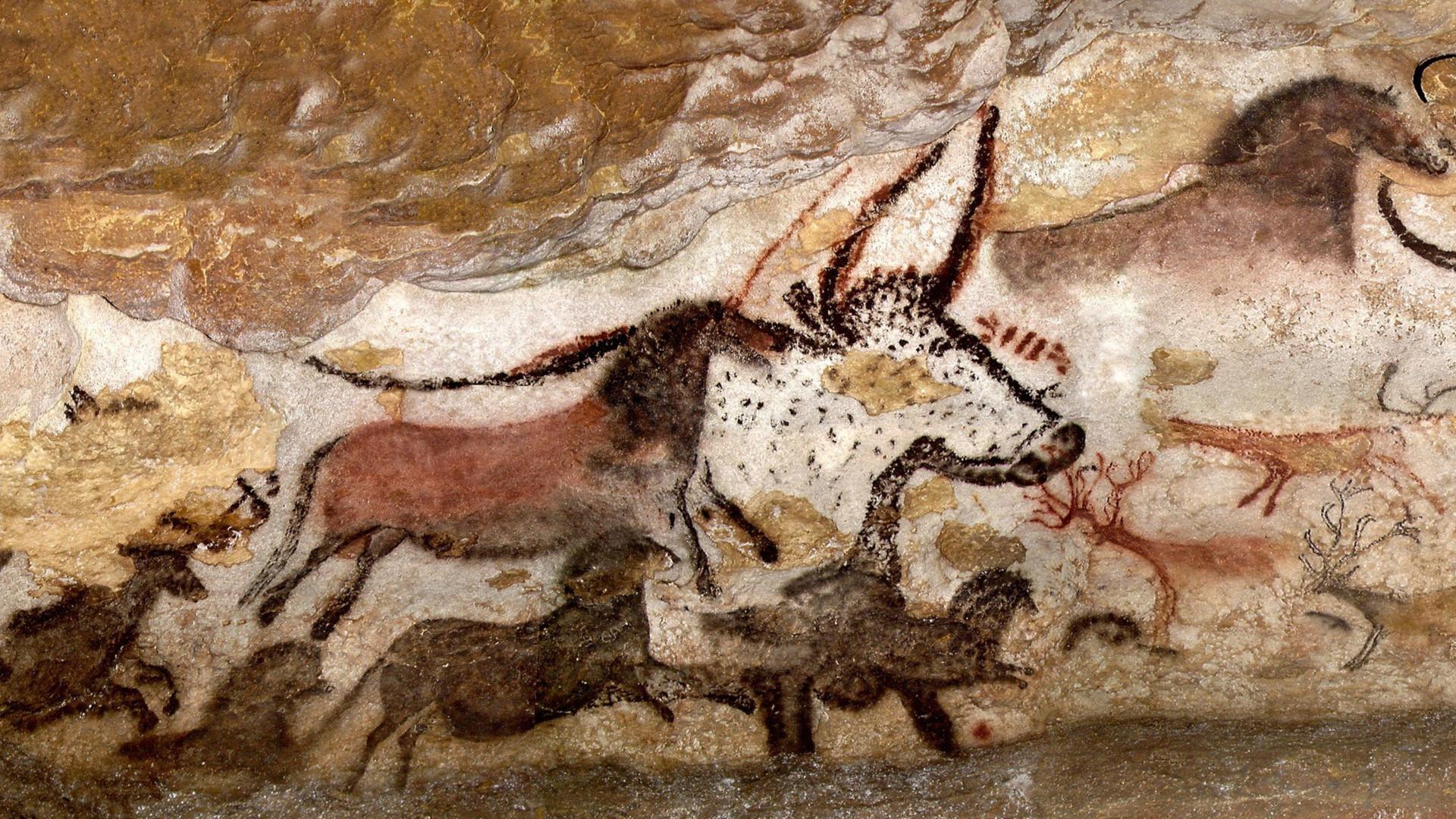
In my office I have a print of the Hall of the Bulls in Lascaux cave. These paintings are estimated to have been made about 17,000 years ago, while paintings in Chauvet, several hundred miles away, predate Lascaux by another 17,000 years or so. I look at the painting and it is both transparent and opaque, its authors a mystery. 17 or 30 or any number of millenia ago, a person stood in the cold darkness of the cave, illuminated by lamps fed by animal fat, and worked the charcoal and ochre into the bare rock wall. The phantasms are, nevertheless, undeniably the work of human hands. And I'm here now, wondering what the devil they were doing down in that cave.