Popular Entries all / by tag / by year / popular
Encrypted SQLite Databases with Python and SQLCipher
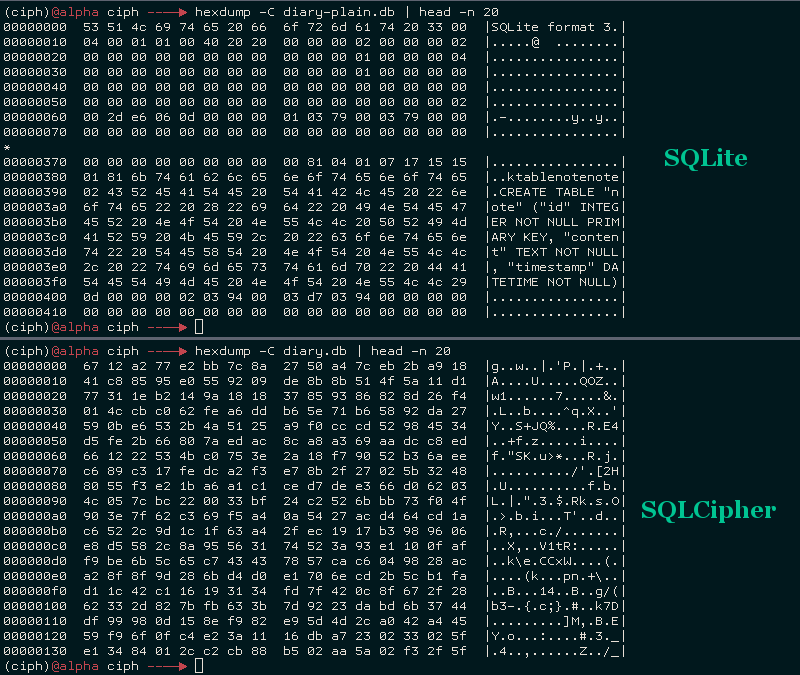
SQLCipher, created by Zetetic, is an open-source library that provides transparent 256-bit AES encryption for your SQLite databases. SQLCipher is used by a large number of organizations, including Nasa, SalesForce, Xerox and more. The project is open-source and BSD licensed, and there are open-source python bindings.
A GitHub user known as The Dod was kind enough to contribute a sqlcipher playhouse module, making it a snap to use Peewee with SQLCipher.
In this post, I'll show how to compile SQLCipher and the sqlcipher3 python bindings, then use peewee ORM to work with an encrypted SQLite database.
SQLite: Small. Fast. Reliable. Choose any three.

SQLite is a fantastic database and in this post I'd like to explain why I think that, for many scenarios, SQLite is actually a great choice. I hope to also clear up some common misconceptions about SQLite.
Using SQLite Full-Text Search with Python

In this post I will show how to use SQLite full-text search with Python (and a lot of help from peewee ORM). We will see how to index content for searching, and how to order search results using two ranking algorithms.
Last week I migrated my site from Postgresql to SQLite. I had been using Redis to power my site's search, but since SQLite has an awesome full-text search extension, I decided to give it a try. I am really pleased with the results, and being able to specify boolean search queries is an added plus. Here is a brief overview of the types of search queries SQLite supports:
- Simple phrase: peewee would return all docs containing the word peewee.
- Prefix queries: py* would return docs containing Python, pypi, etc.
- Quoted phrases: "sqlite extension"
NEAR: peewee NEAR sqlite would return docs containing the words peewee and sqlite with no more than10intervening words. You can also specify the max number of intervening words, e.g. peewee NEAR/3 sqlite.AND,OR,NOT: sqlite OR postgresql AND NOT mysql would return docs about high-quality databases (just trollin).
Check out the full post for details on adding full-text search to your project.
Saturday morning hack: a little note-taking app with Flask

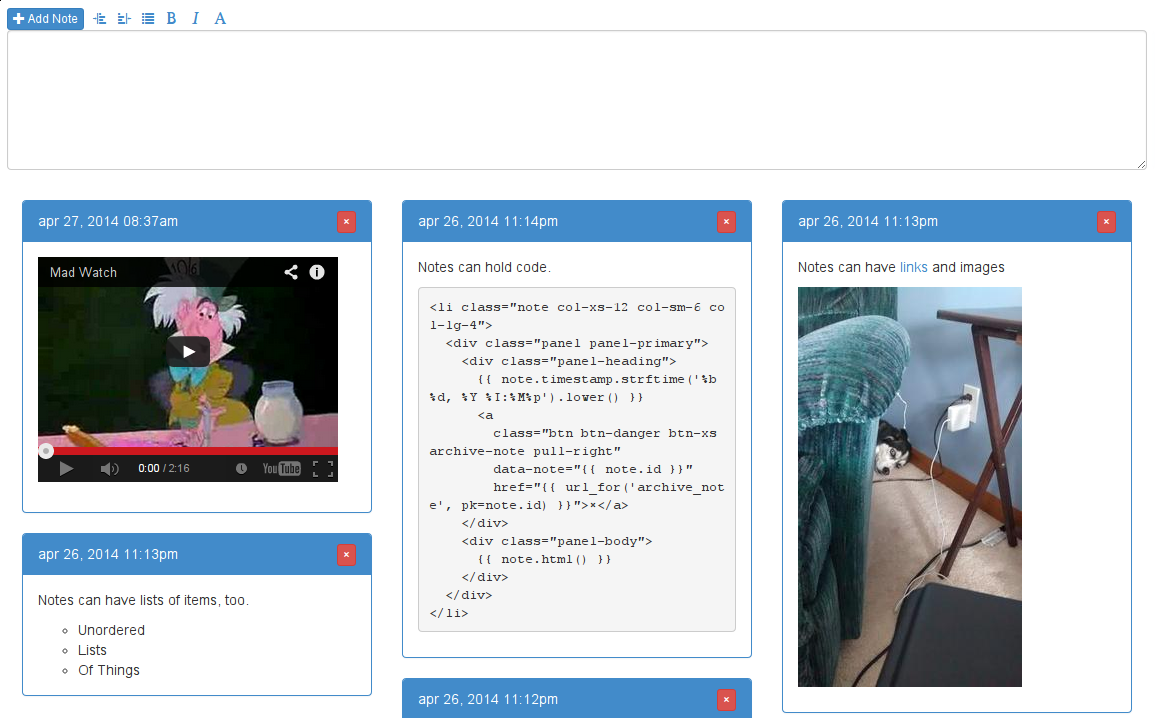
A couple Saturdays ago I spent the morning hacking together a note-taking app. I'm really pleased with the result, so I thought I'd share the code in case anyone else might find it useful.
The note-taking project idea came about out of necessity -- I wanted something that worked well from my phone. While I have a personal wiki site I've used for things like software installation notes or salsa recipes, I've also noticed that because it's so cumbersome to use from my phone, I often end up emailing things to myself. Plus a wiki implies a kind of permanence to the content, making it not a great fit for these impromptu notes. I also like to use markdown to format notes, but markdown isn't too easy on a phone because of the special characters or the need to indent blocks of text. With these considerations in mind, I set out to build a note-taking app that would be easy to use from my phone.
Here is how the app appears on a narrow screen like my phone:

And here it is on my laptop:
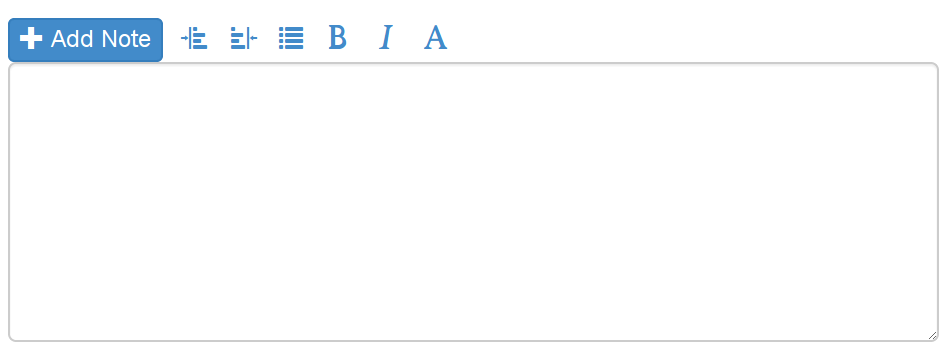
Because markdown is a bit difficult to use when you're not in a nice text editor like vim, I've added some simple toolbar buttons to the editor:
Read the full post for all the details!
Using python to generate awesome linux desktop themes
I remember spending hours when I was younger cycling through the various awesome color themes on my 386, in the glory days of windows 3.1. Remember hotdog stand?
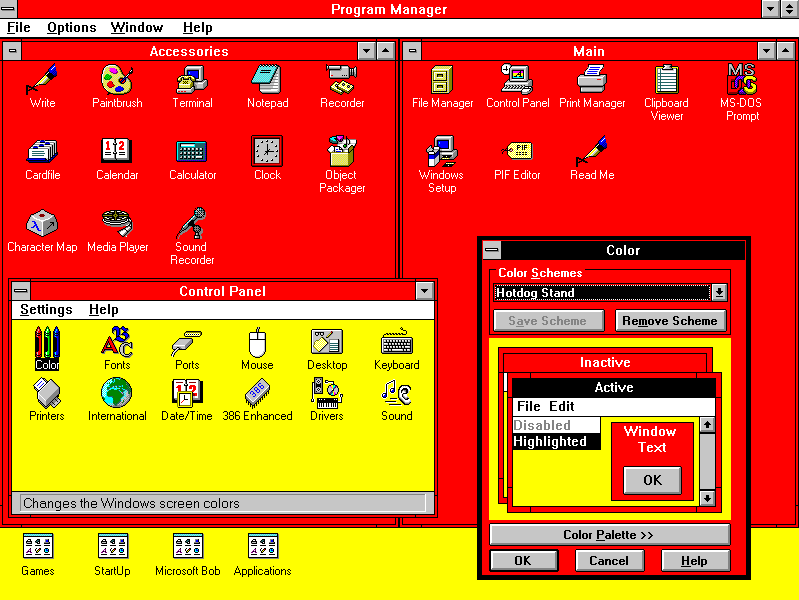
Well, I haven't changed much. I still enjoy making tweaks to the colors and appearance of my desktop. In this post I'll talk about a script I wrote that makes it easy for me to modify all the various colors and configuration files which control the appearance of my desktop.
Structuring flask apps, a how-to for those coming from Django
The other day a friend of mine was trying out flask-peewee and he had some questions about the best way to structure his app to avoid triggering circular imports. For someone new to flask, this can be a bit of a puzzler, especially if you're coming from django which automatically imports your modules. In this post I'll walk through how I like to structure my flask apps to avoid circular imports. In my examples I'll be showing how to use "flask-peewee", but the same technique should be applicable for other flask plugins.
I'll walk through the modules I commonly use in my apps, then show how to tie them all together and provide a single entrypoint into your app.
Using python and k-means to find the dominant colors in images
I'm working on a little photography website for my Dad and thought it would be neat to extract color information from photographs. I tried a couple of different approaches before finding one that works pretty well. This approach uses k-means clustering to cluster the pixels in groups based on their color. The center of those resulting clusters are then the "dominant" colors. k-means is a great fit for this problem because it is (usually) fast.
Here's an example

The results:
Building a bookmarking service with python and phantomjs
Using python and phantomjs, a headless webkit browser, it is a snap to build a self-hosted bookmarking service that can capture images of entire pages. Combine this with a simple javascript bookmarklet and you end up with a really convenient way of storing bookmarks. The purpose of this post will be to walk through the steps to getting a simple bookmarking service up and running.
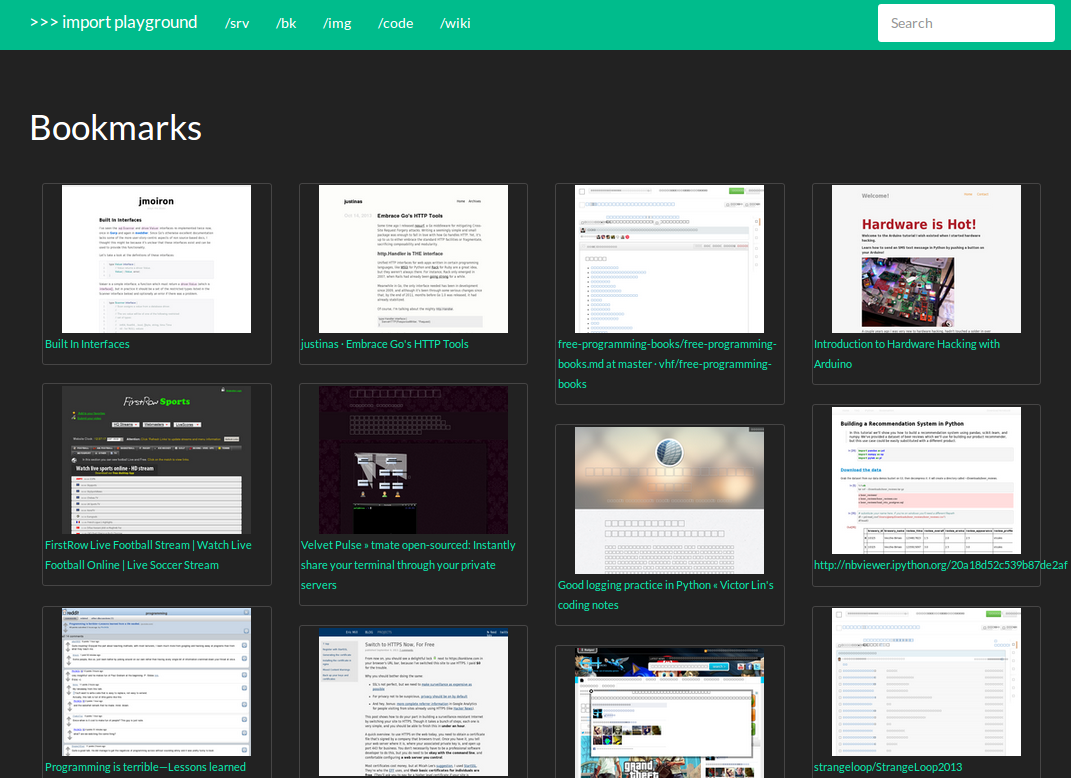
Using Flask blueprints to build a bookmarking app, a pastebin and a wiki
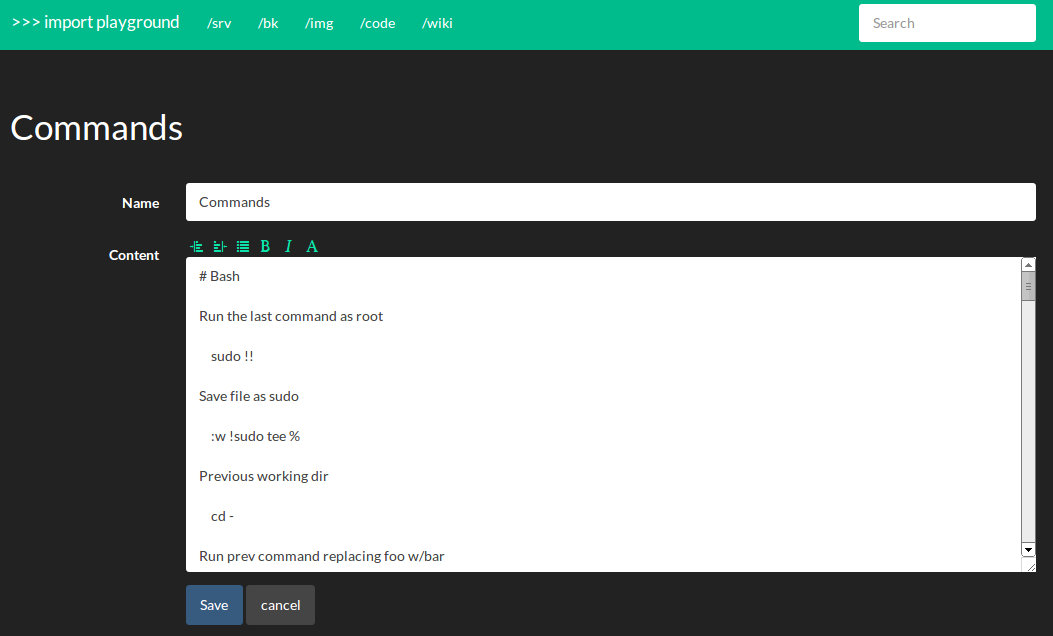
For a change, I've been doing all of my new app development using flask, a python web framework built atop the werkzeug WSGI toolkit. Having used django for the last two years it's been fun to do something different, but at the same time stick with python.
In this post I'd like to show a couple of the small projects I've written using flask over the past few weeks.
A simple botnet written in Python
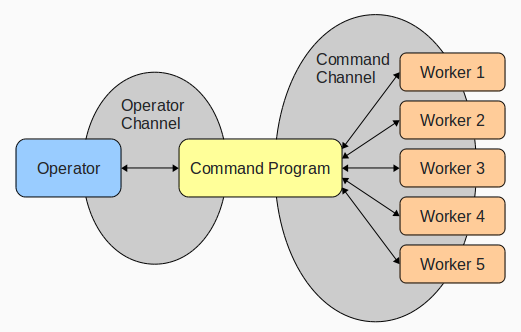
As of this week we instituted a regular "hackday" at my office -- anything goes, you can work on whatever you like, so at 11:30 the night before the hackday started I decided on writing a simple IRC-powered botnet.
Django Patterns: Model Inheritance
This post discusses the two flavors of model inheritance supported by Django, some of their use-cases as well as some potential gotchas.
Self-referencing many-to-many through
How to implement self-referencing many-to-many relationships in Django. Example use cases are modeling asymmetrical following (a-la twitter) or symmetrical friendship (a-la facebook).